


 Email this article
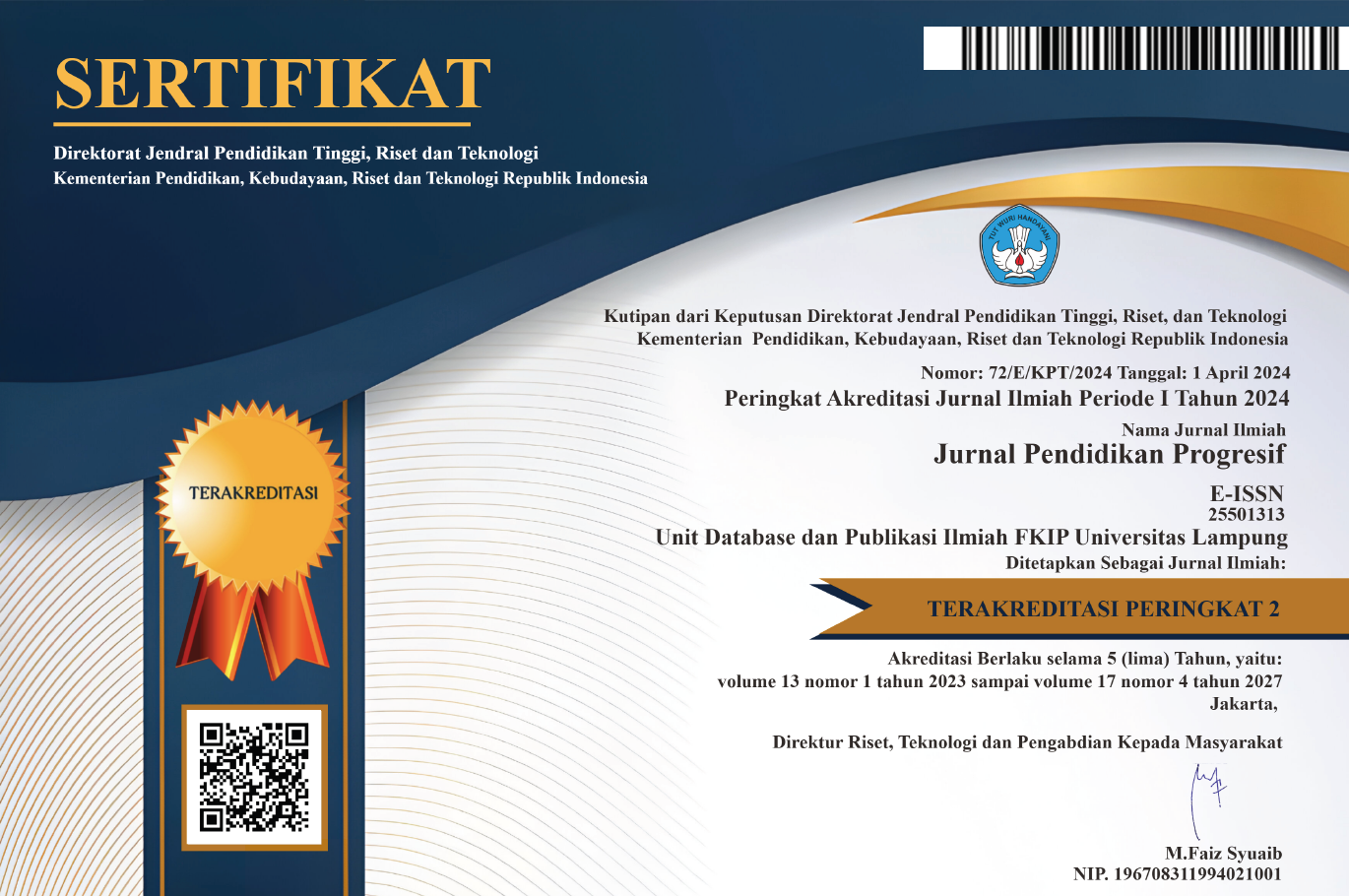
 Intellectual Intelligence, Empowering School Environment and Economics Learning Outcomes among High School Students





This study aims to analyze the influence of intellectual intelligence and an empowering school environment on students’ economics learning outcomes at the senior high school level. This research employed a quantitative approach with a causal associative design. Data were collected using questionnaires and documentation of students’ learning outcomes. The findings revealed that intellectual intelligence significantly influenced students’ economics learning outcomes. In addition, the empowering school environment also had a significant positive effect on learning outcomes. Simultaneously, intellectual intelligence and the empowering school environment contributed significantly to students’ economics learning outcomes. The findings indicate that intellectual intelligence and empowering school environment significantly influence students’ economics learning outcomes. It can be concluded that improving students’ cognitive abilities and creating an empowering school environment are essential for enhancing academic achievement in economics. These findings imply that economics teachers and school administrators should implement student-centered learning strategies and foster supportive learning environments to promote meaningful learning and improve students’ learning outcomes.
Keywords: economics learning outcomes, economics education, empowering school environment, intellectual intelligence.
Amaliana, D., & Kardoyo. (2024). The role of student engagement in mediating learning motivation and learning discipline on economic learning outcomes. Business and Accounting Education Journal, 5(1), 90–107. https://doi.org/10.15294/Baej.V5i1.1119
Artino, A. R., La Rochelle, J. S., Dezee, K. J., & Gehlbach, H. (2014). Developing questionnaires for educational research: AMEE Guide No. 87. Medical Teacher, 36(6), 463–474. https://doi.org/10.3109/0142159X.2014.889814
Astuti, V., & Purnamasari, N. (2025). Evaluating the effectiveness of the problem-based learning model for students in the economics education study program. Jurnal Ekonomi Dan Pendidikan, 22(1), 34–40. https://doi.org/10.21831/JEP.V22I1.82484
Bandura, A., Freeman, W. H., & Lightsey, R. (1999). Self-Efficacy: The exercise of control. Journal of Cognitive Psychotherapy, 13(2), 158–166. https://doi.org/10.1891/0889-8391.13.2.158
Boateng, G. O., Neilands, T. B., Frongillo, E. A., Melgar-Quiñonez, H. R., & Young, S. L. (2018). Best practices for developing and validating scales for health, social, and behavioral research: a primer. Frontiers in Public Health, 6, 366616. https://doi.org/10.3389/Fpubh.2018.00149/
Choi, Y. H., Theobald, E., Velasco, V., & Eddy, S. L. (2025). Exploring how course social and cultural environmental features influence student engagement in STEM active learning courses: a control–value theory approach. International Journal of STEM Education, 2025 12:1, 12(1), 4-. https://doi.org/10.1186/S40594-025-00526-6
Credé, M., & Kuncel, N. R. (2008). Study habits, skills, and attitudes: the third pillar supporting collegiate academic performance. Perspectives on Psychological Science, 3(6), 425–453. https://doi.org/10.1111/J.1745-6924.2008.00089.
Creswell, J. W., & Creswell, J. D. (2017). Research design: Qualitative, quantitative, and mixed methods approaches. Sage Publications.
Duckworth, A. L., Taxer, J. L., Eskreis-Winkler, L., Galla, B. M., & Gross, J. J. (2019). Self-Control and academic achievement. Annual Review of Psychology, 70(Volume 70, 2019), 373–399. https://doi.org/10.1146/Annurev-Psych-010418-103230/1
Fraenkel, J. R., & Wallen, N. E. (1990). How to design and evaluate research in education. 497.
Hanushek, E. A., Woessmann, L., Hanushek, E. A., Woessmann Cesifo, · L, Nber, E. A. H., & Woessmann, L. (2012). Do better schools lead to more growth? Cognitive skills, economic outcomes, and causation. Journal of Economic Growth, 2012 17:4, 17(4),267–321. https://doi.org/10.1007/s10887-012-9081-x
Hayes, A. F., & Coutts, J. J. (2020). Use omega rather than cronbach’s alpha for estimating reliability. Communication Methods and Measures, 14(1), 1–24. https://doi.org/10.1080/19312458.2020.1718629
Hidayat, D. C. F. A. W., & Kamalia, P. U. (2022). Are economics learning outcomes influenced by learning motivation and active learning? Buana Pendidikan: Jurnal Fakultas Keguruan Dan Ilmu Pendidikan Unipa Surabaya, 18(2), 302–316. https://doi.org/10.36456/Bp.Vol18.No2.A5481
Kibriya, S., & Jones, G. (2021). The impact of a safe learning environment in schools on students’ learning outcomes: evidence from Tanzania. Quality Assurance in Education, 29(1), 15–28. https://doi.org/10.1108/QAE-11-2019-0124
Kim, J. H. (2019). Multicollinearity and misleading statistical results. Korean Journal of Anesthesiology, 72(6), 558–569. https://doi.org/10.4097/Kja.19087
Kutsyuruba, B., Klinger, D. A., & Hussain, A. (2015). Relationships among school climate, school safety, and student achievement and well-being: A review of the literature. Review of Education, 3(2), 103–135. https://doi.org/10.1002/Rev3.3043
Lee, J., & Kim, D. (2024). From awareness to empowerment: self-determination theory-informed learning analytics dashboards to enhance student engagement in asynchronous online courses. Journal of Computing in Higher Education, 2024 37:3, 37(3), 1078–1118. https://doi.org/10.1007/S12528-024-09416-2
Li, J., & Xue, E. (2023). Dynamic interaction between student learning behaviour and learning environment: meta-analysis of student engagement and its influencing factors. Behavioral Sciences, 2023, Vol. 13, Page 59, 13(1), 59. https://doi.org/10.3390/BS13010059
Liu, Q., & Nesbit, J. C. (2024). The relation between need for cognition and academic achievement: a meta-analysis. Review of Educational Research, 94(2), 155–192. https://doi.org/10.3102/00346543231160474;
Maschi, T., Turner, S., & Kaye, A. (2000). Empowerment theory. Theoretical Perspectives for Direct Social Work Practice: A Generalist-Eclectic Approach (4th Ed., pp. 43–63). https://doi.org/10.1007/978-1-4615-4193-6_2
Meyer, J., Lüdtke, O., Schmidt, F. T. C., Fleckenstein, J., Trautwein, U., & Köller, O. (2024). Conscientiousness and cognitive ability as predictors of academic achievement: evidence of synergistic effects from integrative data analysis. European Journal of Personality, 38(1), 36–52. https://doi.org/10.1177/08902070221127065
Mishra, P., Pandey, C. M., Singh, U., Gupta, A., Sahu, C., & Keshri, A. (2019). Descriptive statistics and normality tests for statistical data. Annals of Cardiac Anesthesia, 22(1), 67–72. https://doi.org/10.4103/Aca.Aca_157_18
Pan, X. (2023). Online learning environments, learners’ empowerment, and learning behavioral engagement: the mediating role of learning motivation. SAGE Open, 13(4). https://doi.org/10.1177/21582440231205098;
Perwita, D., Widuri, R., & Knollová, H. (2026). Reframing undergraduate economics education through an integrated active and engaging learning model: a classroom action research study. Economic Education Analysis Journal, 15(1), 1–16. https://doi.org/10.15294/Eeaj.V15i1.40928
Peterria, V., & Suryani, N. (2016). Pengaruh lingkungan sekolah, cara belajar, dan motivasi belajar terhadap hasil belajar siswa pada mata pelajaran mengelola peralatan. Economic Education Analysis Journal, 5(3), 860–860. https://journal.unnes.ac.id/sju/eeaj/article/view/13588
Quin, D. (2017). Longitudinal and contextual associations between teacher–student relationships and student engagement: a systematic review. Review of Educational Research, 87(2), 345–387. https://doi.org/10.3102/00346543166694
Reeve, J., Basarkod, G., Jang, H. R., Gargurevich, R., Jang, H., & Cheon, S. H. (2025). Specialized purpose of each type of student engagement: a meta-analysis. Educational Psychology Review 2025 37:1, 37(1), 13-. https://doi.org/10.1007/S10648-025-09989-Z
Richardson, M., Abraham, C., & Bond, R. (2012). Psychological correlates of university students’ academic performance: A systematic review and meta-analysis. Psychological Bulletin, 138(2), 353–387. https://doi.org/10.1037/A0026838
Ryan, R. M., & Deci, E. L. (2020). Intrinsic and extrinsic motivation from a self-determination theory perspective: Definitions, theory, practices, and future directions. Contemporary Educational Psychology, 61, 101860. https://doi.org/10.1016/J.Cedpsych.2020.101860
Salong, A., & Ansiska, P. (2025). Integrating mindful, meaningful, and joyful learning to enhance student engagement and learning outcomes in economic education. AL-ISHLAH: Jurnal Pendidikan, 17(3), 4543–4557. https://doi.org/10.35445/Alishlah.V17I3.7484
Schneider, M., & Preckel, F. (2017). Variables associated with achievement in higher education: A systematic review of meta-analyses. Psychological Bulletin, 143(6), 565–600. https://doi.org/10.1037/BUL0000098
Schunk, D. H., & DiBenedetto, M. K. (2020). Motivation and social cognitive theory. Contemporary Educational Psychology, 60, 101832. https://doi.org/10.1016/J.Cedpsych.2019.101832
Shi, Y., & Qu, S. (2022). Analysis of the effect of cognitive ability on academic achievement: Moderating role of self-monitoring. Frontiers in Psychology, 13, 996504. https://doi.org/10.3389/FPSYG.2022.996504/
Siahaan, C. D., & Pramusinto, H. (2018). Pengaruh disiplin belajar, lingkungan sekolah, dan fasilitas belajar terhadap hasil belajar [the influence of learning discipline, school environment, and learning facilities on learning outcomes]. Economic Education Analysis Journal, 7(1), 279–285. https://journal.unnes.ac.id/sju/eeaj/article/view/22879
Sugiyono. (2021). Metode Penelitian Kuantitatif, Kualitatif, dan R&D. Alfabeta.
Sullivan, G. M., Jr., & Jr., A. R. A. (2013). Analyzing and interpreting data from likert-type scales. Journal of Graduate Medical Education, 5(4), 541–542. Https://Doi.Org/10.4300/Jgme-5-4-18
Sürücü, L., & Maslakçı, A. (2020). Validity and reliability in quantitative research. Business & Management Studies: An International Journal, 8(3), 2694–2726. https://doi.org/10.15295/BMIJ.V8I3.1540
Taherdoost, H. (2016). Sampling methods in research methodology: how to choose a sampling technique for research. SSRN Electronic Journal. https://doi.org/10.2139/SSRN.3205035
van der Zanden, P. J. A. C., Denessen, E., Cillessen, A. H. N., & Meijer, P. C. (2018). Domains and predictors of first-year student success: A systematic review. Educational Research Review, 23, 57–77. https://doi.org/10.1016/J.Edurev.2018.01.001
von Stumm, S. (2018). Better open than intellectual: the benefits of investment personality traits for learning. Personality and Social Psychology Bulletin, 44(4), 562–573. https://doi.org/10.1177/0146167217744526;
Walstad, W. B., Rebeck, K., & Butters, R. B. (2013). The test of economic literacy: development and results. The Journal of Economic Education, 44(3), 298–309. https://doi.org/10.1080/00220485.2013.795462
Wang, M. Te, & Degol, J. L. (2015). School climate: a review of the construct, measurement, and impact on student outcomes. Educational Psychology Review, 2015 28:2, 28(2), 315–352. https://doi.org/10.1007/S10648-015-9319-1
Xu, Z., Zhao, Y., Zhang, B., Liew, J., & Kogut, A. (2023). A meta-analysis of the efficacy of self-regulated learning interventions on academic achievement in online and blended environments in K-12 and higher education. Behaviour & Information Technology, 42(16), 2911–2931. https://doi.org/10.1080/0144929X.2022.2151935
Refbacks
- There are currently no refbacks.

This work is licensed under a Creative Commons Attribution-ShareAlike 4.0 International License.
View My Stats